


World News | The Citizen Mirror International Desk
A fresh wave of geopolitical uncertainty is gripping the Middle East as tensions involving Iran, Israel, and the United States continue to escalate, raising fears of a wider regional conflict and a potential global energy shock.
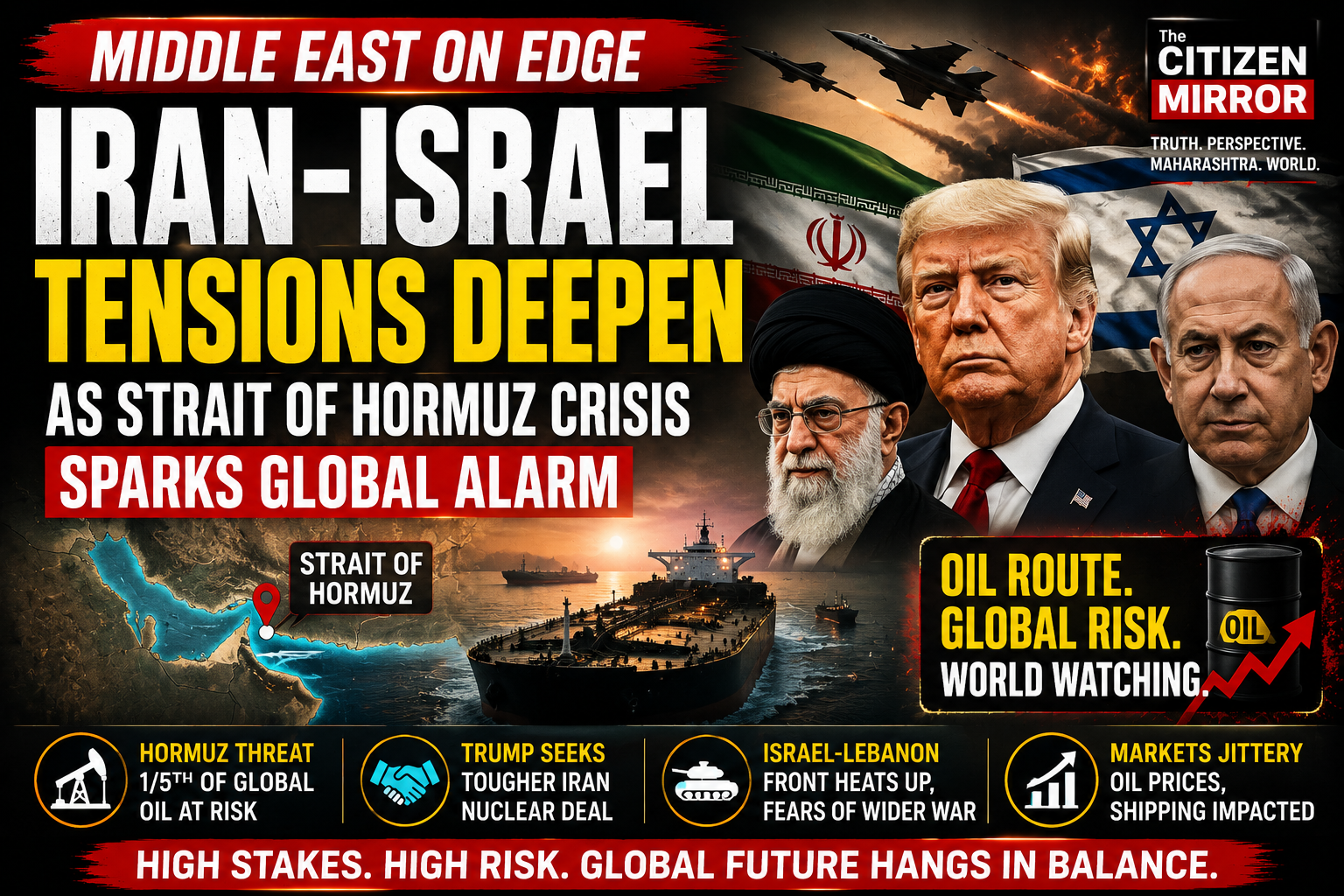
The spotlight remains firmly on the strategically crucial Strait of Hormuz — one of the world’s most important oil shipping routes — where military activity, diplomatic deadlock, and growing security concerns are creating anxiety across international markets.
Why the Strait of Hormuz Matters to the World
The Strait of Hormuz is considered the lifeline of global energy trade. Nearly one-fifth of the world’s oil supply passes through this narrow maritime corridor connecting the Persian Gulf to international markets.
Recent reports suggest shipping activity remains severely disrupted amid ongoing tensions involving Iran and Western powers. Maritime security agencies have warned commercial vessels to exercise extreme caution while navigating the region.
The uncertainty surrounding the waterway has already triggered concerns over:
- Global oil prices
- Fuel supply chains
- Shipping insurance costs
- International trade routes
- Energy security for major economies including India
Trump Pushes for Tougher Iran Deal
Adding another layer of complexity, U.S. President Donald Trump has reportedly sent back a proposed Iran agreement seeking stronger language on Tehran’s nuclear commitments and the future status of the Strait of Hormuz.
The move indicates that negotiations remain fragile despite ongoing diplomatic efforts.
Senior U.S. officials have also warned that military options remain on the table if talks fail to achieve desired outcomes.
Meanwhile, Iran has continued asserting its control over maritime activities in the region, insisting that vessels comply with its security protocols while passing through Hormuz.
Israel-Lebanon Front Adds New Pressure
The regional situation has become even more volatile after Israeli military operations intensified in southern Lebanon.
Israeli Prime Minister Benjamin Netanyahu described recent military advances as a significant strategic achievement, while Lebanese authorities accused Israel of escalating the conflict and violating sovereignty.
The developments have raised fears that multiple conflict zones across the Middle East could become interconnected, making diplomatic resolution increasingly difficult.
Global Markets Watching Closely
Financial markets across the Gulf region are reacting cautiously as uncertainty over Iran-U.S. negotiations continues.
Analysts warn that prolonged disruption in Hormuz could impact:
- Crude oil exports
- Global inflation
- Shipping costs
- Fuel prices in Asia and Europe
Market volatility has already emerged in several Gulf exchanges as investors monitor developments surrounding potential ceasefire arrangements and maritime security.
What Could Be the Impact on India?
India remains one of the countries closely monitoring the Hormuz situation because a significant portion of its crude oil imports passes through the region.
Any prolonged disruption could potentially influence:
- Petrol and diesel prices
- LPG supply chains
- Import costs
- Inflationary pressure on consumers
Reports indicate Indian authorities have been working on contingency shipping strategies to minimize disruption to energy supplies.
The Citizen Mirror Analysis
The current Iran-Israel crisis is no longer just a regional conflict — it is rapidly becoming a global economic and strategic concern.
The Strait of Hormuz sits at the center of international energy security. Any escalation involving Iran, Israel, or the United States has the potential to send shockwaves through oil markets, shipping corridors, and geopolitical alliances.
For India, the stakes are particularly high. Rising energy costs can directly impact inflation, transportation expenses, manufacturing costs, and household budgets.
While diplomatic negotiations continue, the coming days could prove critical in determining whether the region moves toward de-escalation or a broader confrontation.