

New Delhi | The Citizen Mirror Media & Politics Desk
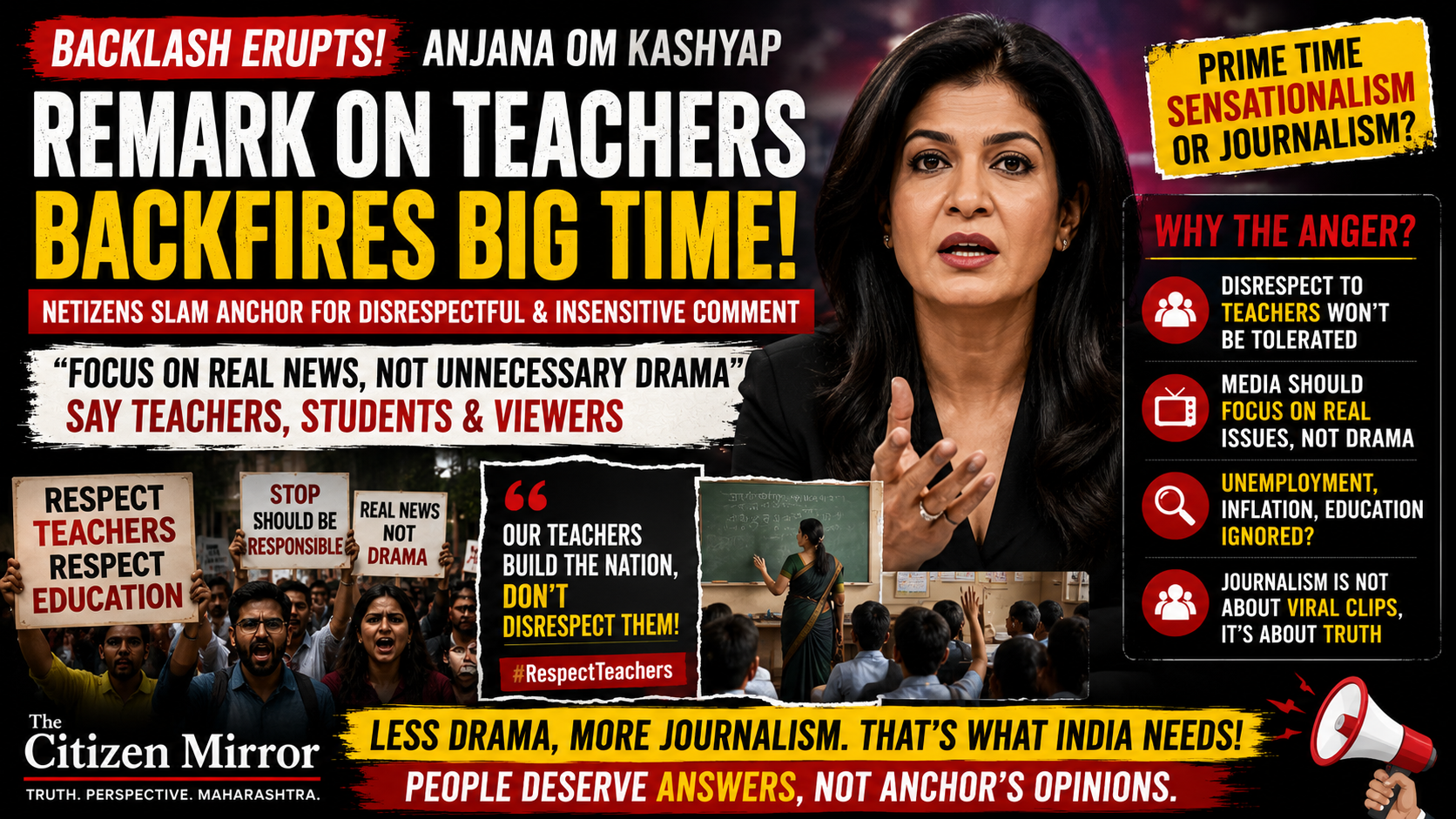
Senior television anchor Anjana Om Kashyap is facing massive backlash on social media after her recent remarks regarding teachers sparked outrage among sections of the public, educators, and independent commentators.
The controversy quickly escalated online, with critics accusing mainstream television media of prioritizing sensational debates and political narratives over real issues affecting ordinary citizens such as unemployment, inflation, education quality, healthcare, and governance.
Social Media Erupts
Soon after the clip surfaced online:
- hashtags criticizing the anchor began trending,
- teachers’ groups reacted strongly,
- political commentators questioned newsroom priorities,
- and social media users accused television debates of becoming increasingly disconnected from ground realities.
Many users argued that instead of targeting educators or creating controversial debate moments, national television media should focus more on:
- education reforms,
- student struggles,
- rural schools,
- unemployment,
- rising costs of living,
- and public welfare issues.
Why The Remark Triggered Anger
Teachers are often viewed as one of the foundational pillars of society.
Critics argued that any dismissive or controversial commentary involving educators naturally attracts emotional public reaction because:
- teachers shape future generations.
- government schools already face severe challenges,
- and educators continue to work under pressure in many parts of India.
Several users on X and Instagram stated that Indian media increasingly appears more interested in “viral outrage” than journalism focused on accountability and public interest.
Growing Frustration With Prime-Time Media
The controversy has once again reignited a larger debate around Indian television journalism.
Over recent years, sections of viewers have increasingly criticized prime-time news culture for:
- aggressive panel shouting matches,
- political polarization,
- personality-driven debates,
- sensationalism,
- and reduced focus on investigative reporting.
Media analysts say younger audiences are gradually shifting toward:
- digital journalism,
- independent news platforms,
- and long-form analysis
because they are losing trust in traditional television news formats.
Journalism Or Entertainment?
The backlash also highlights a larger question:
Is prime-time television still focused on journalism or has it become political entertainment?
Experts believe credibility remains the biggest challenge for modern television media.
In an era where social media instantly fact-checks and clips go viral within minutes, audiences are increasingly demanding:
- balanced reporting,
- accountability journalism,
- factual discussions,
- and respectful public discourse.
The Citizen Mirror Analysis
Criticizing public figures, questioning systems, and holding institutions accountable is part of journalism.
However, when debates begin appearing disconnected from public concerns, audiences often respond strongly.
At a time when India faces major discussions around:
- education,
- jobs,
- economy,
- governance,
- and social development,
many citizens believe media platforms should focus more on issues affecting everyday life rather than controversy-driven narratives.
Final Question
Should national media focus more on public issues — or on creating viral prime-time moments?