


Mumbai | The Citizen Mirror Business & Economy Desk
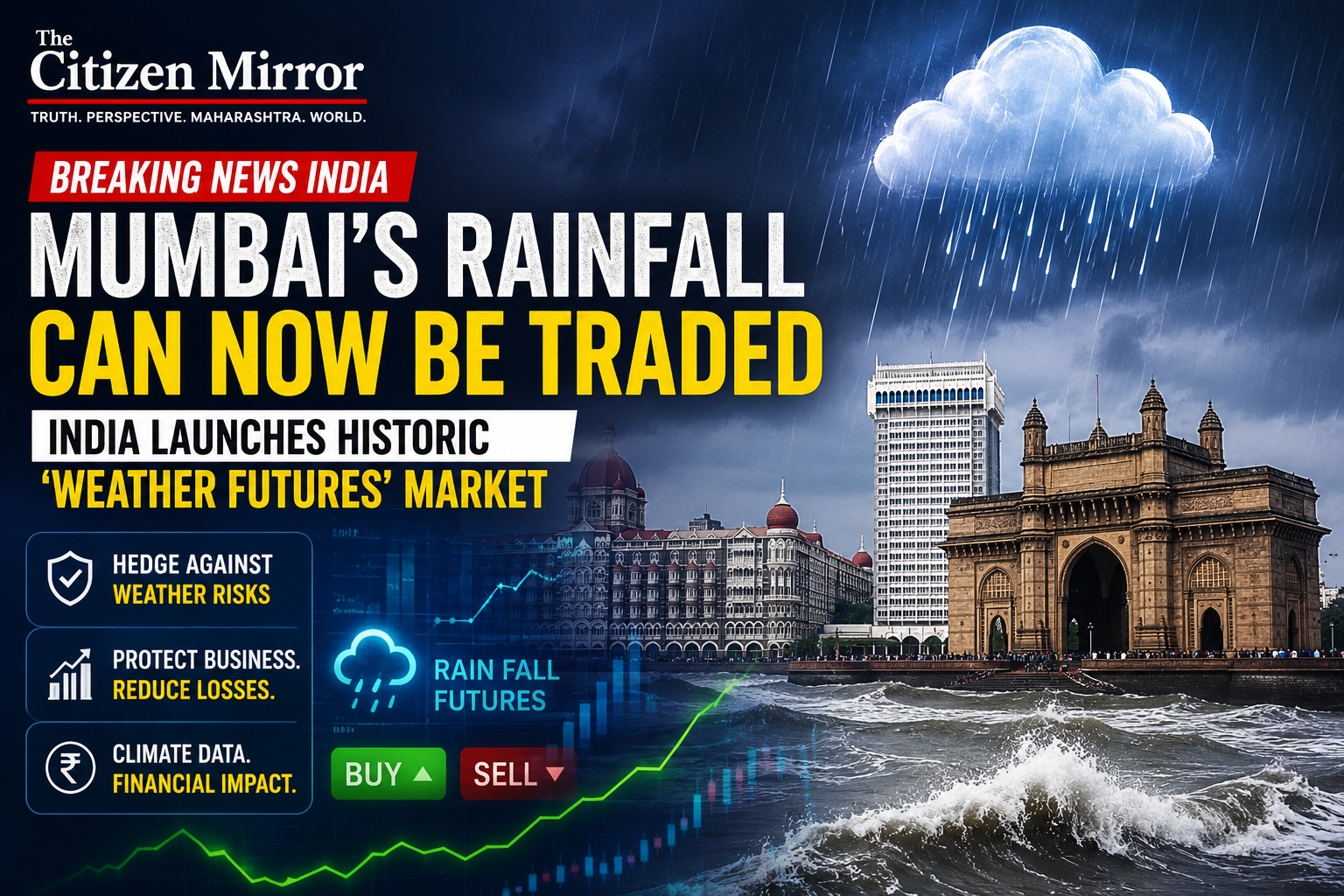
India is set to enter a new era of climate-linked finance with the launch of the country’s first-ever “Weather Futures” market a system where weather conditions like rainfall can be traded in financial markets. In a major development, Mumbai’s rainfall patterns are expected to become part of tradable financial contracts, marking a historic shift in how India manages climate and economic risk.
The move comes at a time when extreme weather events, unpredictable monsoons, floods, and climate-related disruptions are increasingly impacting businesses, industries, and urban economies across the country.
What Are Weather Futures?
Weather Futures are financial contracts linked to weather conditions such as:
- rainfall
- temperature
- heatwaves
- climate fluctuations
These instruments allow companies and investors to protect themselves against financial losses caused by unpredictable weather.
Industries that could benefit include:
- agriculture
- logistics
- aviation
- insurance
- energy
- retail
- e-commerce
Mumbai Rainfall Enters Financial Markets
Under the new system:
- Mumbai rainfall data
- monsoon forecasts
- weather department models
could be used to create market-linked contracts.
If rainfall levels are significantly higher or lower than expected, businesses and traders may either gain or lose money based on the terms of the contract.
Experts say this could help companies hedge against climate-related financial uncertainty.
Why This Is A Big Deal For India
India is one of the world’s most climate-sensitive economies due to:
- dependence on monsoons
- agriculture-driven sectors
- densely populated urban regions
- rising climate volatility
Weather disruptions already affect:
- crop production
- transport systems
- urban infrastructure
- supply chains
- electricity demand
The launch of Weather Futures is being seen as a major financial innovation aimed at reducing climate risk exposure.
Climate Change Driving New Financial Systems
Over the last few years, India has witnessed:
- extreme rainfall
- urban flooding
- severe heatwaves
- drought conditions
with increasing frequency.
Financial experts believe climate change is now reshaping global investment and insurance systems, making climate-risk trading an emerging sector worldwide.
Could This Affect Common Citizens?
For now, the market is expected to be more relevant for:
- corporations
- institutional investors
- insurance firms
- large-scale industries
However, experts believe the long-term impact could eventually improve:
- climate insurance systems
- agricultural protection
- disaster risk planning
- economic stability during extreme weather
Global Markets Already Use Weather Trading
Countries like:
- the United States
- the United Kingdom
- several European economies
already use weather derivatives and climate-linked financial products.
India’s entry into this space signals the growing importance of climate finance in emerging economies.
The Citizen Mirror Analysis
The launch of Weather Futures linked to Mumbai rainfall is more than a financial experiment — it reflects a future where climate itself becomes a major economic variable.
As climate change continues to reshape industries, governments and financial systems worldwide are increasingly treating weather as a measurable economic risk.
For India, this could become a major step toward:
- climate-risk management
- smart economic planning
- modern financial innovation