

New Delhi | The Citizen Mirror Special Report
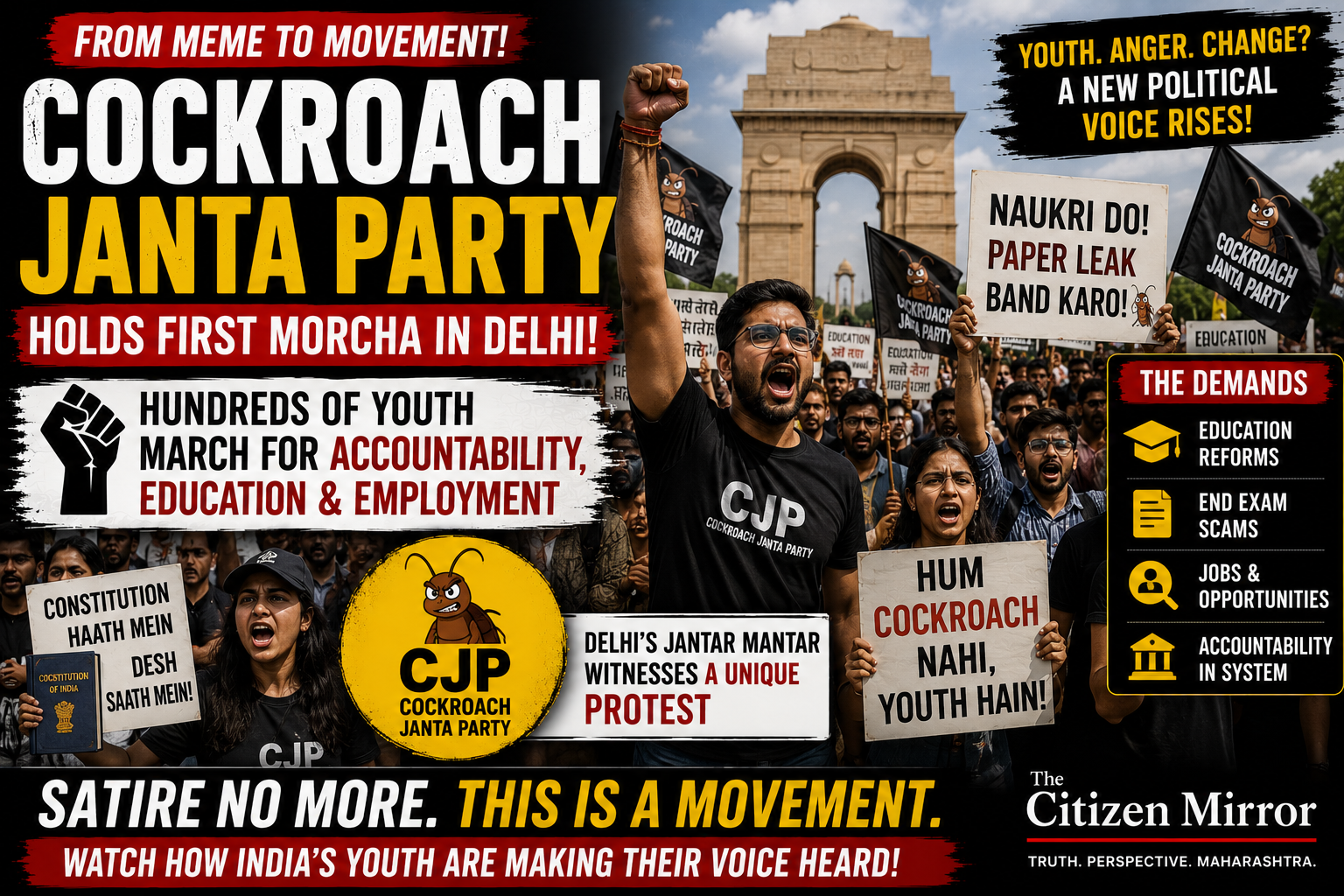
What started as a satirical social media movement has now stepped onto the streets of India’s capital. The Cockroach Janta Party (CJP), a youth-driven protest movement led by Abhijeet Dipke, held its first major public demonstration in New Delhi, drawing hundreds of students and young supporters demanding accountability over education-related controversies, exam irregularities, and rising youth frustration.
The protest at Jantar Mantar marked the transformation of an online campaign into a real-world movement, with participants carrying copies of the Constitution, flowers, and placards highlighting concerns over unemployment, exam paper leaks, and the education system.
From Viral Meme To National Movement
The Cockroach Janta Party emerged after controversial remarks comparing unemployed youth to “cockroaches,” a label that many young people ironically embraced as a symbol of protest and resistance. The movement rapidly gained traction online, attracting millions of followers and widespread attention among students and young professionals.
What began as satire has now evolved into a broader platform expressing concerns over:
- Youth unemployment
- Examination scandals
- Education reforms
- Accountability in public institutions
- Opportunities for young Indians
Protesters Demand Accountability
One of the central demands raised during the demonstration was accountability for repeated examination controversies and alleged irregularities affecting students across the country. Protest leaders called for reforms in the education system and stronger safeguards to protect students’ futures.
Several activists, students, and public figures also attended or expressed support for the demonstration, helping amplify the movement’s visibility.
Why This Protest Matters
Political observers say the significance of the Cockroach Janta Party is not in its name but in what it represents.
The movement reflects growing frustration among sections of India’s youth over:
- Job opportunities
- Competitive examinations
- Rising educational pressure
- Economic uncertainty
- Representation in public discourse
Government And Critics Respond
The movement has attracted both support and criticism.
Supporters view it as a peaceful youth-led campaign demanding reforms and accountability. Critics, however, argue that the movement risks becoming more symbolic than solution-oriented and question whether social media popularity can translate into meaningful policy change.
The Citizen Mirror Analysis
Regardless of political affiliation, the Delhi march demonstrated one clear reality: India’s youth want to be heard.
The rapid rise of the Cockroach Janta Party highlights how digital movements can quickly transform into street-level activism when public concerns remain unresolved. Whether the movement becomes a lasting force or fades as a viral phenomenon will depend on its ability to move beyond slogans and present practical solutions.
For now, the Delhi protest has succeeded in placing youth concerns, education reforms, and employment challenges back into the national conversation.